Posts

Showing posts with the label Spring Runs

Updated Trap Data

Image
    We finally found a little time to do some analysis, but there's much more to be done and much more to come, so bear with us...     Short of getting some late additions to the Creel Project, the numbers are pretty much in and there are some very interesting items to note. 2014 is shaping up to be one of the more unusual runs I can remember. Everyone is scratching their heads over the weather, the late ice, the sustained high flows, and the apparent mystery of the disappearing year classes of adults, both Steelhead and Kamloops all across the Big Lake; it is just plain strange.     I guess I don't want to do too much speculation on the mystery of the missing year-classes because I'm thinking that we just won't know if they are truly missing until we see some reports on trap efficiency. With the sustained high flows, it's entirely possible that quite a few fish simply bypassed the traps, so we'll just have to wait and see what ...

I got slapped in the head today...

Image
    So I was sitting in my home office working today when I heard something that put a big smile on my face. I had to listen carefully just to make sure, but after a couple minutes there it was again, the unmistakable spring song of a male cardinal. He was sitting in the big pine which grows just outside my deck window letting all the other fellas know that my back yard was now his exclusive territory. Whether you realize it or not, we steelheaders are scientists of sorts. We rely on all sorts of signs to let us know that the steelheading season is upon us; in short, we practice the ageless art of Phenology.       Phenology is the study of the seasonal timing of life cycle events. You practice phenology when you record the date a certain plant flowers, a tree's leaves emerge, an insect hatches, a migratory bird appears on its nesting grounds, or when a cardinal begins singing it's spring song. The dates on which the...

Get Set...

Image
Now that the Lower Shore tribs are becoming ice-free and snowmelt is working it's way out of the system, it's time to take a close look at temps . I finally had a little time to analyze the latest data from three Lower Shore index streams and here's where it stands: We're still on the low side of the temperatures required to initiate the first big push of steelhead and kamloops, but we're getting close. If the weather holds and/or we get some warm rain, things will happen fast. Once the high and average temps reach their counterpart thresholds depicted, we should see the first big numbers showing up in the tribs. That's not to say we don't have fish around already. Kamloops in particular have a slightly lower threshold than the steelhead but for all practical purposes the above thresholds depicted work for both. Be intersesting to see how the next week or so plays out.... Regards- NMF

On Your Marks...

Image
What a difference a couple days can make! With the influx of recent warm weather suddenly the male chickadees, cardinals and jays are all singing their spring songs and setting up territories. Geese are looking for nesting ponds and the local toms are strutting like mad in an effort to impress the ladies. I even saw a red-winged blackbird male yesterday. Time to look hard at conditions on the Shore... Just before the storm hit on the North Shore, things were moving fast and early. SE Wisconsin tribs were opening up fast. The Brule was open all the way to between FF and 13, there was significant brown-up in the basin, and the Knife was showing signs of ice breakup which was all highly unusual. The storm up this-a-way only delayed progress, but things are moving again. 'Couple items of great interest: Tribs on the Michigan side are open and blowing out from Kenosha to north of Milwaukee. What's really nuts is that some of these tribs have already hit optimal temps to trigger larg...

Final 2011 Run Statistics

Image
Lower Shore Creel vs. Trap Numbers: Lower Shore Creel Survey Numbers: Mid Shore Creel Survey Numbers: Upper Shore Creel Survey Numbers: Shorewide Combined Creel Numbers vs. the Shorewide Creel Average: Only two notes: 1. I'm using the term "Shorewide Creel Average" pretty loosely. This is only the 2nd year the DNR has reported the numbers in the format they are now using. As such the "average" only represents 2010/2011. Still Better than nothin'! 2. There are still fish on the Upper Shore... Any questions please post them in the comments section and I'll try and answer them asap. Regards - NMF

2011 Spring Run Update

Image
Interesting stuff from last weekend... It appears that the initial push of steelhead from last week was better than we thought; and while overall temps decreased in Lower Shore tribs, two things happened which certainly helped fishing: First, the stream temps didn't bottom out, which meant that fish which did enter the tribs were quite active despite the snow, wind and cold air temps. Second, discharge decreased despite the storm to very good levels of flow and clarity which was a big change from just a few days prior. Those that adjusted tactics based on stream conditions did very well. Once again carrying a thermometer is critical. It will be interesting to see the trap numbers once they start coming out. The creel numbers are a great tool for getting a sense of what kinds of numbers are already in the streams, while the trap numbers give you a good sense of the overall stage of the steelhead and kamloops returns. One item of practical note- We should already be seeing the second...

Psst hey... wanna see something kinda cool?

Image
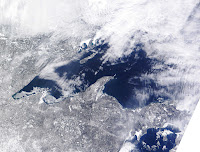
In the interest of being a well rounded steelheader, I'm always on the prowl for information sources which can give me a feel for what's going on out there. One thing I like to do prior to the spring runs is to keep tabs on the progression of snowmelt going on in the various Superior watersheds. But there's another reason I like to look at this type of information. Migratory fish use all kinds of chemical markers in the water to navigate home, and part of what gives each river a "smell" all it's own are the unique soil compositions within the home watersheds. Sometimes in spring you can be driving along 61 and the water is a clear, sparkling blue (or a dark, angry, roiling green as often as not). Other times all you see for the first hundred yards or so out is a sea of reddish-brown stained water; the result of snowmelt or rain causing the rivers to rise and carry local sediments out into the Big Lake. However it happens, even if I'm not looking forwar...

Time's a Wastin'!

Image
Well everyone, in case you haven't noticed, it's MARCH! Which means that steelheading is just around the corner, even if it seems like the snow will never end. If you haven't already, it's time to get your gear together, patch those waders, finish tying flies or spawn, and quit dreamin' about seeing that first enormous square, spotted tail distorted by a boil the size of a garbage-can lid. For me personally, I can't wait to step out of the car and get my first whiff of cedar mixed with balsam. To hear the sound of breakers over the the rush of snowmelt-laden water; or to see stars so thick I can't tell where the sky stops and water begins on the big lake. Let's face it, whether you catch a fish or not, we are blessed with incredible opportunities every spring, and steelheading is so much more than simply fishing. We encourage you all to take at least one opportunity this year to pass along a little of what you know to the next generation. Whether it'...

Bois Brule River Spring Steelhead

Image
The past is prologue... I'm not sure which philosopher said that but he must have been a steelheader. I finally got a chance to plug the 2009 spring data into my historical data from the Brule River, so I thought I'd post it. Click thumbnail for larger image What you are looking at is a snapshot of the spring 2009 return data vs. the historical flow and return data for spring conditions on the Brule. Let's face it, the North Shore lags the South Shore by a period of time when it comes to steelhead runs, and lots of us can't wait to get a line in the water after a long winter. Now, keep in mind that this is NOT -repeat NOT- a prediction of when the run is going to occur. It is simply a representation of past flow, run return and ice-out activity. The complex interactions between flow, temperature, photoperiod (length of daylight), year-class strength, recruitment etc. all play a part in the year-to-year fluctuations in the size and actual timing of steelhead returns. Yet...